


If you spend any time in founder communities, you’ll see the same frustration over and over:
“We built the product. Why is getting customers so hard??”
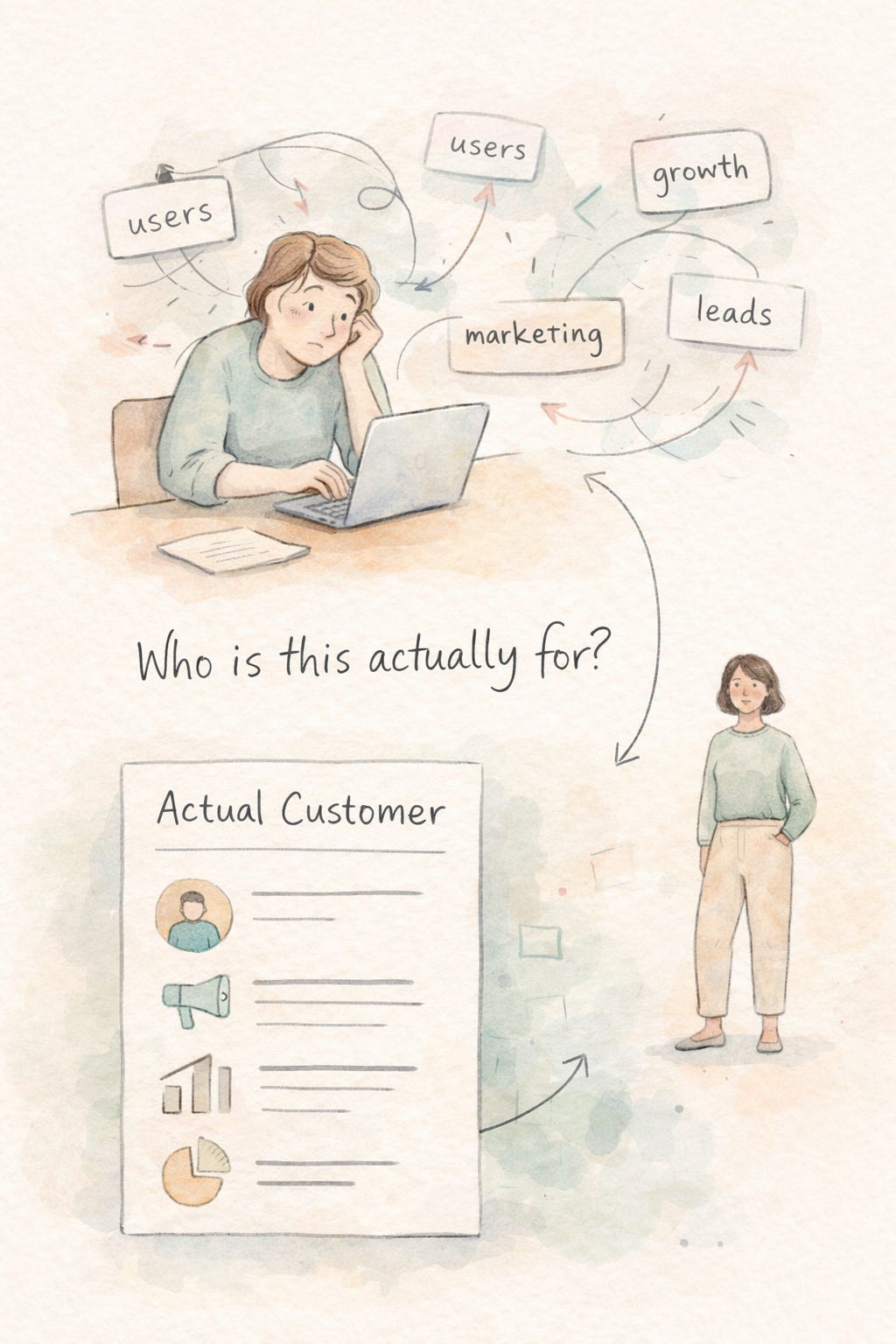
Over the past month, I went down a bit of a rabbit hole reading founder threads on Reddit. r/SaaS, r/indiehackers, r/startups. Hundreds of comments. (I know. I know. I have a fun life.)
The pattern was surprisingly consistent.
Founders are not struggling to build products. (Thanks to tools like Lovable, Emergent, and Bolt…everyone can be a builder now!)
Where the struggle happens is getting the right people to use them.
Finding actual users who care enough to try the product and tell them what’s working is not easy.
The conversation always sounds roughly like this:
“We launched, but nobody’s using it.”
“We’re getting traffic but no conversions.”
“How do you find your first 10 real users?”
“People say it’s cool, but they don’t pay.”
A lot of the time, this is diagnosed internally as a distribution problem.
They assume they need better marketing, more reach, or a growth hack they haven’t discovered yet.
Sometimes that’s true, but a lot of the time, the real issue shows up much earlier.
They don’t have a shared operational definition of the customer.
When “our customer” means “basically anyone”
One of the fastest ways to make customer acquisition feel impossible is to build a product for too many people at once.
When founders describe their target user, it often sounds something like:
“Anyone who manages projects.”
“Small businesses.”
“People who want to be more productive.”
“Startups.”
These sound reasonable on the surface, but they are too broad to guide anything useful.
Marketing and messaging become vague, and outreach feels like throwing darts in the dark.
If you don’t know exactly who the product is for, every channel feels inefficient. Because it IS.
The difference between a market and a customer
A market is not the same thing as a customer.
“Startups” is a market.
A customer looks more like this:
A seed-stage SaaS founder with 20–50 employees who just hired their first customer success manager and is realizing onboarding is messy.
That founder has a very specific problem.
They are feeling it every day.
They will recognize themselves immediately when they see the right message.
That’s when acquisition starts to feel less like shouting into the void and more like starting conversations with the right people.
Why the first users matter so much
A lot of founders say they want their “first 10 users.”
I would argue that what they actually need are the right first 10 users.
The early adopters who:
• have the exact problem the product solves
• are motivated enough to try something new
• are willing to give honest feedback
• will tell you where the product is confusing or weak
Those users teach you how to talk about the product.
They help refine the messaging.
They expose which features actually matter.
Without them, marketing stays theoretical.
You end up optimizing channels before you understand the problem you’re selling.
When distribution finally starts working
Once the customer definition gets clearer, everything downstream improves.
Messaging becomes sharper.
Outreach feels more natural.
Channels start performing differently.
Instead of trying to reach everyone, you start seeing patterns in where your people actually spend time.
And most importantly, conversations get easier.
Because the person you’re talking to recognizes their problem in what you’re describing.
The pattern I see inside startups
After 14+ years inside early-stage companies, this shows up constantly.
Founders think they have a marketing problem.
The reality is that it’s a company alignment problem.
There is no shared operational definition of the customer.
What this looks like
Sales is talking to one type of customer.
Marketing is targeting a different one.
The product was built for a third.
So the founder says:
“We need more leads.”
The real issue is that no one can clearly describe what a good customer actually is. So what would these leads do?
The clarity that’s missing
• who the product is for
• what problem is painful enough that they will pay to solve it
• where those people already spend time
If your team can’t answer those the same way, acquisition will feel (and BE) inconsistent.
Why this is an ops problem
It doesn’t stay in marketing.
• Sales closes the wrong deals
• Onboarding struggles
• Customers churn
What looks like a top-of-funnel problem is a completely broken customer lifecycle.
What changes when this gets fixed
Clarity sharpens messaging.
Outreach gets easier.
Channels start working.
Customer acquisition stops feeling like guesswork.
It starts behaving like a system. And we all know how much I LOVE a system.
Without a shared, operational definition, every effort to reach “users” becomes guesswork.
Yes, I’ve seen this a lot with startups. They define the customer way too broadly, then wonder why the message does not convert.
When you try to be for everyone, you usually end up being for no one.