

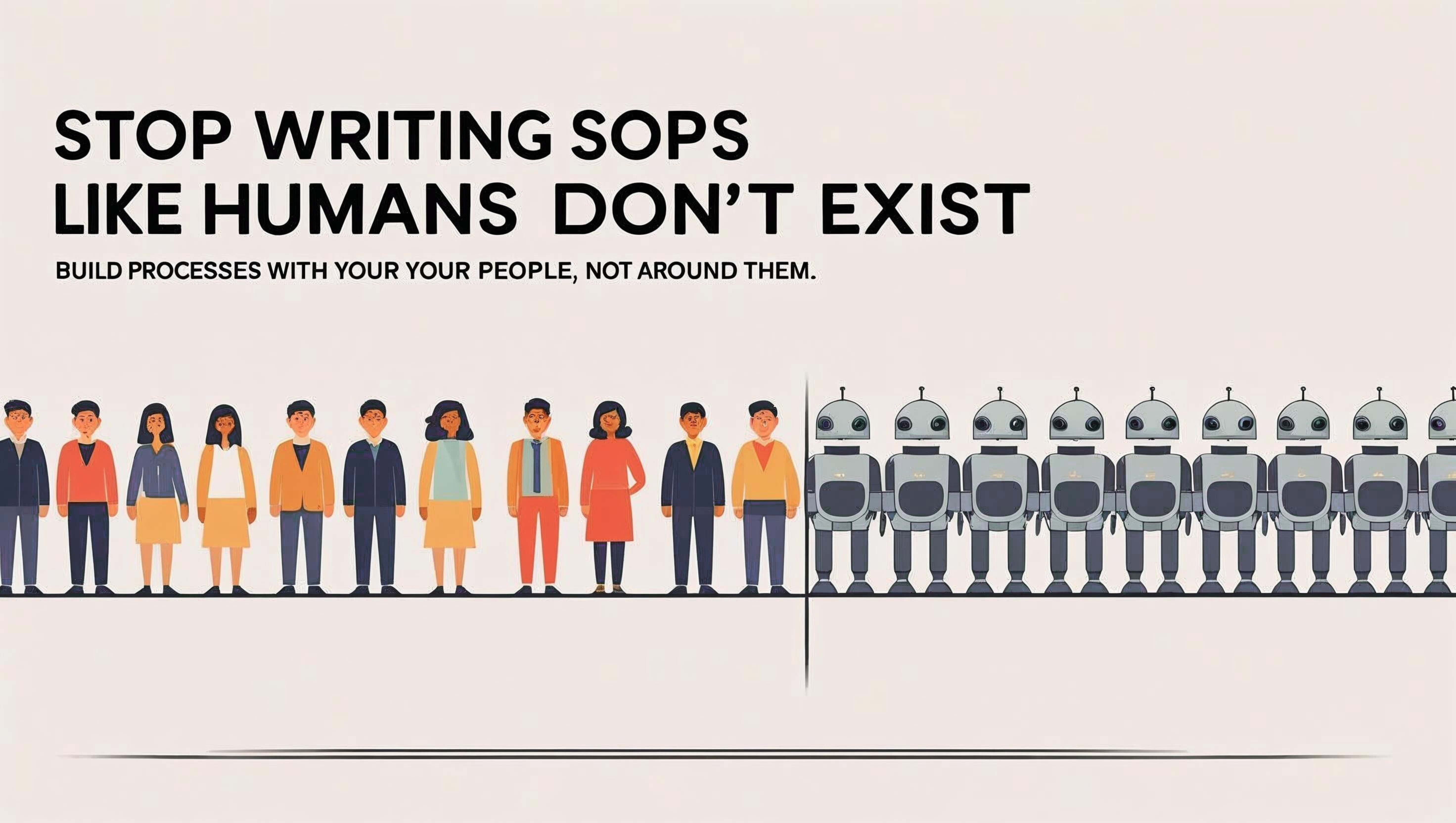
Every time I see an SOP that treats humans like robots, I want to ask the creator: Who hurt you?
Somewhere along the way, we decided that "efficient operations" meant stripping every ounce of humanity out of our processes. We've become obsessed with automation, templated responses, and rigid checklists that sound more like assembly line instructions than workflows designed for actual human beings.
It's killing our businesses.
The Jargon Disease
I cringe really hard when I open a "standard operating procedure" and see steps like:
"Click this in HubSpot"
"Drag that into Stripe"
"Post this in Slack"
Zero names attached. Zero context. Zero consideration for the human who has to actually execute this robotic dance.
What gets me even more is when I walk through these processes with teams, I can immediately tell that no human in the designated department ever touched this document. It doesn't fit their workflow. It skips tools they actually use. It ignores the reality of how work actually gets done.
I once reviewed a customer success onboarding process where they'd completely forgotten about a new client health tool the CS team had been using for months. The process was written by someone who'd never sat in on a client call, never felt the panic of a churning customer, never had to explain to an angry client why their onboarding was delayed.
It was operations theater, all the appearance of structure with none of the substance.
What Happens When You Treat Humans Like Variables
When teams are forced to follow dehumanized processes, something predictable happens: they lose interest in keeping up with the process. They turn into robots themselves, just checking boxes without looking at the specific situation. There's no nuance, no personalization left.
When you're early-stage (which is my sweet spot), your clients should feel like they matter individually. They should experience the humanity in your product. But instead, we're creating customer experiences that feel as robotic as our internal processes.
The energy drops. Focus disappears. Results become mechanical.
Worse yet, teams start creating what I call "shadow processes." You know that subreddit called "Desire Path"? It shows pictures of sidewalks with patches of worn grass three feet away, where people actually walk. An engineer designed the "official" path, but they didn't consider how people would naturally move through the space.
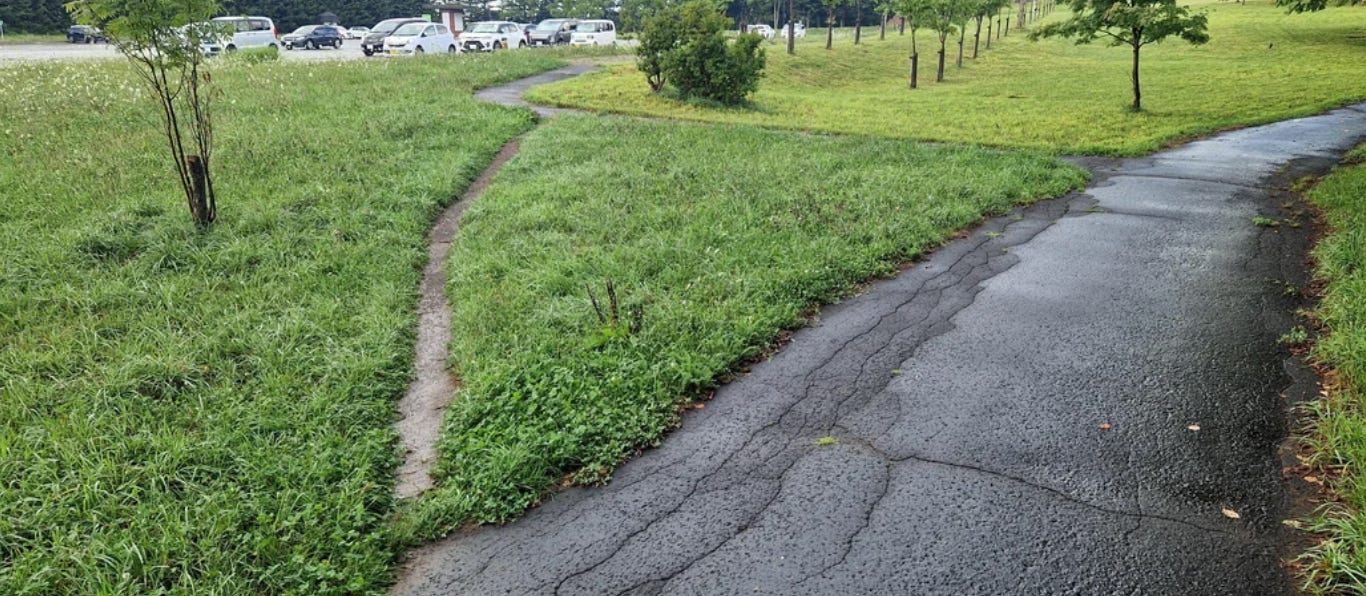
This is exactly what happens in companies. Teams create their own rougher, undocumented workarounds because the official process doesn't match reality. And suddenly you've lost all control because god only knows what they're actually doing—it's not documented, it's just happening.
The "AI Everything" Trap
I think most founders hear about AI from investors and think it has to be EVERYWHERE, all the time—and if it isn't, they're behind. But here's what I've learned: AI isn't quite there yet. It still needs human guidance and judgment.
The problem isn't AI itself. The problem is skipping the human foundation and jumping straight to automation.
When you use AI for client outreach without understanding what your clients actually need, you get a canned, categorized view of what they're saying. Then you respond with a canned response, and the client is thinking, "WTF, that's not my problem at all."
Same thing happens with internal processes. Founders automate workflows that nobody actually wanted to follow in the first place. The result? Angry employees stuck with processes that don't fit their actual workflow or problems.
People-First Processes, AI-Powered Execution
So how do you bring humanity back to operations while still leveraging AI smartly?
You start with people-first processes, then add AI-powered execution.
I bring the people who will actually use the process to the table first. I sit down with department leadership and say: "Tell me what's broken. Where are things falling apart for you? Give me the tea, vent to me…all of it." They can share their issues in whatever format works—Slack, WhatsApp, in person, whatever.
We restructure based on that reality, not some theoretical ideal.
I create mindmaps in Miro or Lucidchart to show what they actually have going on. I link it back to Notion so there's one home base. Then I set up cadences for them to check on these steps in weekly or biweekly meetings.
After we have that human foundation? That's when I bring in AI to handle the right stuff, using smart prompting to turn all that beautifully messy human input into clean process drafts, automating data entry and routing, taking care of the behind-the-scenes work that doesn't need human judgment.
The key is: AI handles execution, humans handle decisions. AI takes care of the repetitive stuff, humans handle the nuanced, client-facing work where personalization matters.
The difference? Names are still attached to every step. There's still accountability. There are still feedback loops. The team still has a voice in it all, but now AI is doing the heavy lifting on the administrative work.
It's not about feelings. It's about getting buy-in from the team who will be using these processes. You hired these people because you trust their instincts, because they're gritty, and frankly, because they get shit done. So trust them enough to bring them into the process design.
The Real Cost of Optimizing Humans Out
When you take humans out of operations, you lose connection to your clients. You miss feedback. You create processes that feel robotic to the people you're trying to serve.
The result? Higher churn. Lower ARR. Teams that are bored and uncommitted to the product. Turnover starts happening because people don't feel heard. Not just your team, but your clients too.
When you do it right, though? Teams feel validation and safety. Their voice matters, so they want to show up for the founder and each other. Founders can trust their teams and breathe a sigh of relief. You get better grasp on client and prospect feedback.
ARR goes up. Churn goes down.
The Bottom Line
You are an early-stage startup. If you take the time to set up operations with humanity at the center, it will scale without breaking because your team will want to keep up with what they helped create.
Stop treating your people like variables in your efficiency equation. Start treating them like the intelligent, capable humans you hired them to be.
Your operations don't need to be perfect. They need to be human-first, with AI as your smart assistant and not your replacement for human judgment.
Ready to stop optimizing humans out of your operations? Take my Chaos → Clarity Diagnosis to see where your processes might be losing their humanity, or book a free 30-minute planning call to talk about how we can work together to get your team feeling heard, valued, and aligned.
I really like the way you framed “operations theater” and the cost of treating people like variables. Feels like the challenge (and opportunity) is building systems that not only respect efficiency but also respect the messy ways people actually create, connect, and adapt.
we had a fun UX jam today imaginatively redesigning the client onboarding process. by the end of the hour, something more mechanical got all sorts of human graffiti.