

One year ago, I quit being a W2.
I sat in my car after my last day and thought: cool, now I just have to convince strangers to pay me for the thing I’ve been doing inside other people’s companies for 14 years. No pressure
.
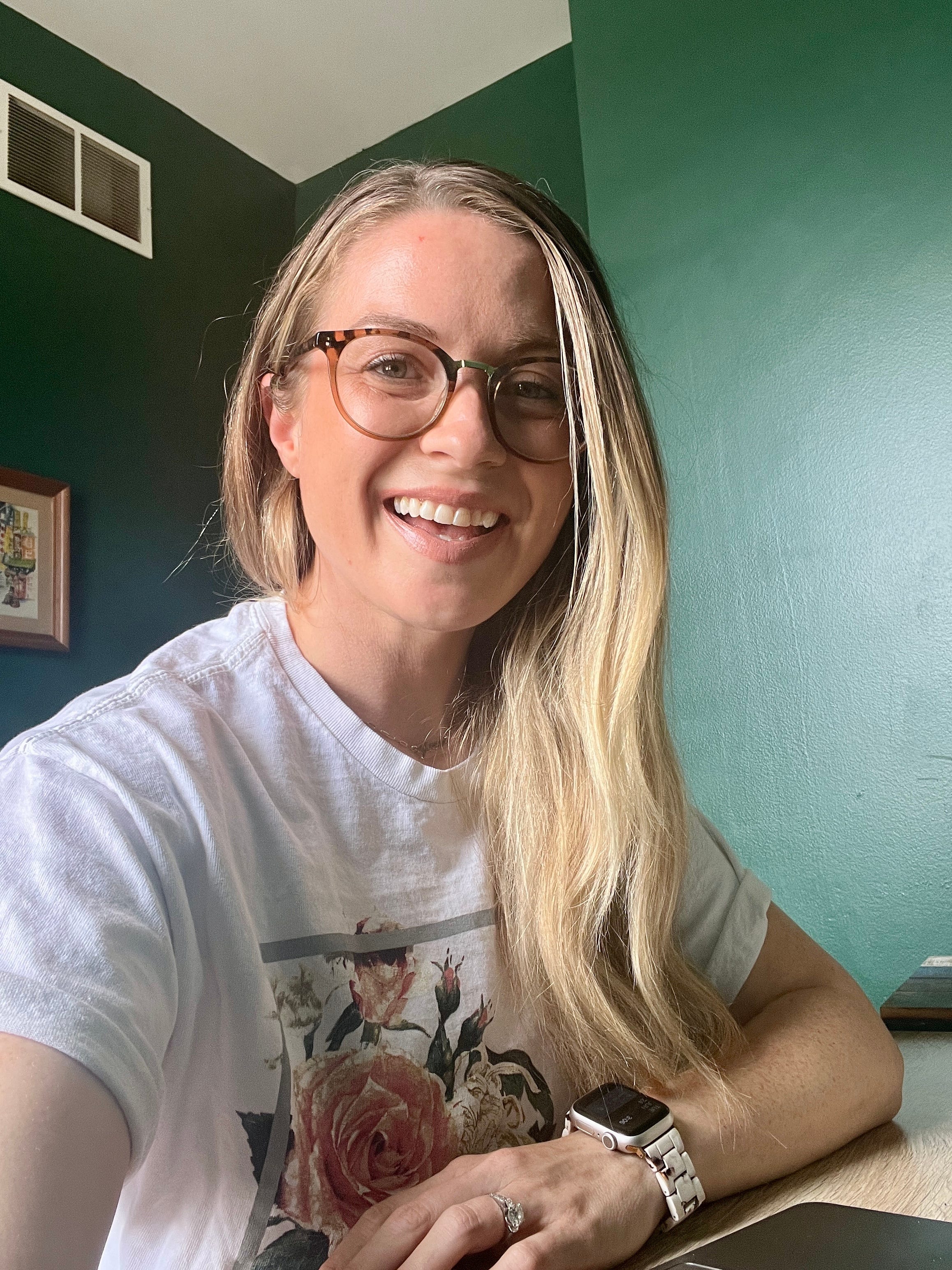
A year later, I’ve fully replaced my W2 income. This newsletter somehow has over 4,700 of you in it. Most importantly, when my daughter needs me, I’m there.
I could stop the post here and call it a nice little brag, but that’s not actually the interesting part of this year.
The interesting part is that I spent 14 years telling founders what their businesses needed. And then I built one. And it turns out knowing the playbook and living the playbook are two very different things.
So instead of a highlight reel, here’s what I actually learned. The stuff I now understand in my body, not just in a deck.
The “is anyone going to pay me” panic doesn’t go away. You just get faster at moving through it.
I’ve told founders a hundred times: the fear doesn’t mean you’re wrong, it means you’re doing something that matters. I believed it. I didn’t feel it until I sent my first invoice and refreshed my banking app four times in an hour.
The panic isn’t a signal to stop. It’s just the tax on doing something real. You don’t wait for it to go away before you act. You act with it sitting right next to you.
Sometimes the fix isn’t more structure. It’s less permission for new work to exist.
A founder pulled me into what was supposed to be a quick conversation about shaping the next sprint.
By minute ten, it was obvious the sprint wasn’t the problem. Product was talking in Notion. Engineering was operating entirely out of its own head. Process was trying to stand in the middle, translating between two teams that weren’t actually talking to each other. And the founder was sitting there, acting as the human API between every function in the company.
The instinct in that room was to add more structure. More meetings. More “alignment.” I’ve watched founders do this a hundred times, and as a true ops girl, I’ve felt the pull to do it myself.
The actual call was simpler and somehow a lot harder: no new work until the existing work had an owner, a board, and a deployment plan.
The line I gave was, “If it’s not on the board, it doesn’t exist.”
Boards don’t fix anything by themselves, but the company had reached the stage where invisible work had stopped being harmless and started being dangerous. Every task living only in someone’s head was a task that could secretly die, get duplicated, or get blamed on the wrong person.
If your team can tell you what they’re working on but you can’t see it anywhere without asking them, you are dealing with invisible work. Invisible work is how founders end up back in the middle of everything, even when they swore they’d delegated it.
Boundaries aren’t the opposite of partnership. They’re what make the partnership usable.
Here’s the one I got wrong this year, and I’m not proud of it.
I underestimated how expensive unclear boundaries are when you’re the one embedded inside someone else’s chaos. Not financially, although yes, that too. Cute little bonus consequence.
I mean operationally. Emotionally. I let a few client relationships stay too vague for too long because I was trying to be helpful, flexible, easy to work with. Turns out “flexible” turns into “available for everything” faster than you’d think if you don’t define the edges early.
I know this. I build clarity for a living. I have literally told founders, in these exact words, that the fuzziest relationships in their company are the ones that eventually break. And I still let my own scope stretch because a founder needed help, I could see the path forward, and it felt easier to just do the thing.
The lesson was annoying because it was so obvious once I said it out loud: a boundary isn’t a wall you put up to protect yourself from the people you’re helping. It’s the thing that makes the help sustainable enough to keep showing up.
If you’ve got a hire, a vendor, or a fractional partner whose scope has grown past what anyone actually agreed to, that’s not a them problem. That’s an unclear-edges problem, and it’s fixable in one written conversation.
You don’t need permission to build the thing you already know how to build.
For 14 years I was already doing this work, just without the title, the ownership, or the full credit. I didn’t need a new skill to go independent. I needed to stop waiting for someone to tell me I was allowed to.
If you’re sitting on expertise you’ve been handing to someone else’s company for years, that’s not a reason to wait. That’s the business.
So. One year in. Here’s what I actually know now that I didn’t a year ago:
The fear doesn’t disqualify you. The lack of clarity isn’t a phase you outgrow. Imposter syndrome doesn’t mean you’re a fraud; it means you’re paying attention. And most of what looks broken in your company is actually just an honest conversation you haven’t had yet.
If you’ve hired me, read this newsletter, or just cheered me on this year, truly, thank you. You built this too.
Year two, let’s go!!!
Katie what’s your best approach to dealing with invisible work?
I would have thought a clear systematic approach is one way to make the roles much clearer?